Historical Use of Chlorine Dioxide
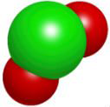
The Chlorine Dioxide Molecule
Is this as powerful as they
say?...
You
may be surprised...
Nowadays, many people associate chloride dioxide with Jim Humble's MMS protocol,
which has of course been in the spotlight for several years already due to its power "anti-pathogenic" properties.
Interestingly enough however, this strange but remarkable substance plays a much bigger part in the world than most
people realize.
First, chlorine dioxide is for the most part obtained from sodium chlorate but
mixing the sodium chlorate with a suitable acid. In fact, when you purchase MMS, you actually receive sodium
chlorate, rather than chlorine dioxide. You also receive some citric acid, which you then mix with the chlorate as
per the instructions given. The reason why MMS is not shipped premixed is because once mixed, the resultant
substance is extremely volatile, meaning it breaks down violently. For this reason, manufacturing plants have to
take considerable care in order to avoid explosions, hence the reason why they almost always bypass the gas
phase.
One of the primary uses for chlorine dioxide is seen in the bleaching of paper
pulp. Chlorine dioxide is also widely used in the disinfectants industry, and ever since the late nineties, it's
been increasingly used for water purification. This is essentially because of its extreme effectiveness in killing
a vast plethora of contaminants and pathogens, including the likes of anthrax for example. Chlorine dioxide is also
effective at killing certain water borne viruses. In all this applications, it has proven to be far superior to
regular elemental chlorine. In fact, chlorine is one of a handful of biocides which has received EPA
approval.
Over and above water treatment, chlorine dioxide has also been widely used to
disinfect air, particularly in the US following the anthrax attacks. It was also extensively used in the wake of
hurricane Katrina in order to destroy potentially dangerous mold which had began to accumulate in many homes due to
the flooding.
Chlorine dioxide has and is still sometimes used in the teeth whitening process,
although several other substances tend to have overtaken it in terms of popularity. There are of course several
other instances where chlorine dioxide is used on a daily basis, such as the air scrubbers in animal waste
treatment facilities.
One point of interest here is that the chlorine dioxide used in these cases is
generally manufactured slightly differently to the way it was done in the past. This change in the manufacturing
process took place for two main reasons.
1) The more modern production process is considerably safer than the original
process.
2) The new process does not result in manufacturers having to deal with large
quantities of unwanted elemental chlorine, a substance which is known to be carcinogenic.
Even though chlorine dioxide has so many uses, and despite the fact that thousands
of people have begun using MMS for health reasons, the ingestion of chlorine dioxide in many cases still remains a
somewhat controversial subject. This was once again highlighted twice during 2010 when the Food and Drug
Administration issued an official warning against using MMS. When the warning was questioned by advocates of this
product, the reply was that several people have suffered side effects such as nausea, diarrhea, and on occasions,
internal inflammation.
A number of clinical trials have been carried out which supported the idea that
regulated consumption poses no real danger, but because of the strict level of control applied to those studies,
some argue that the results may not be 100% accurate.
|